Five Signs Your Business Tools Aren't Talking to Each Other
If you're copy-pasting between apps, keeping three versions of the truth, or hearing about problems from customers first, your tools are disconnected. You almost never need new software to fix this. You need the software you already own to share data.
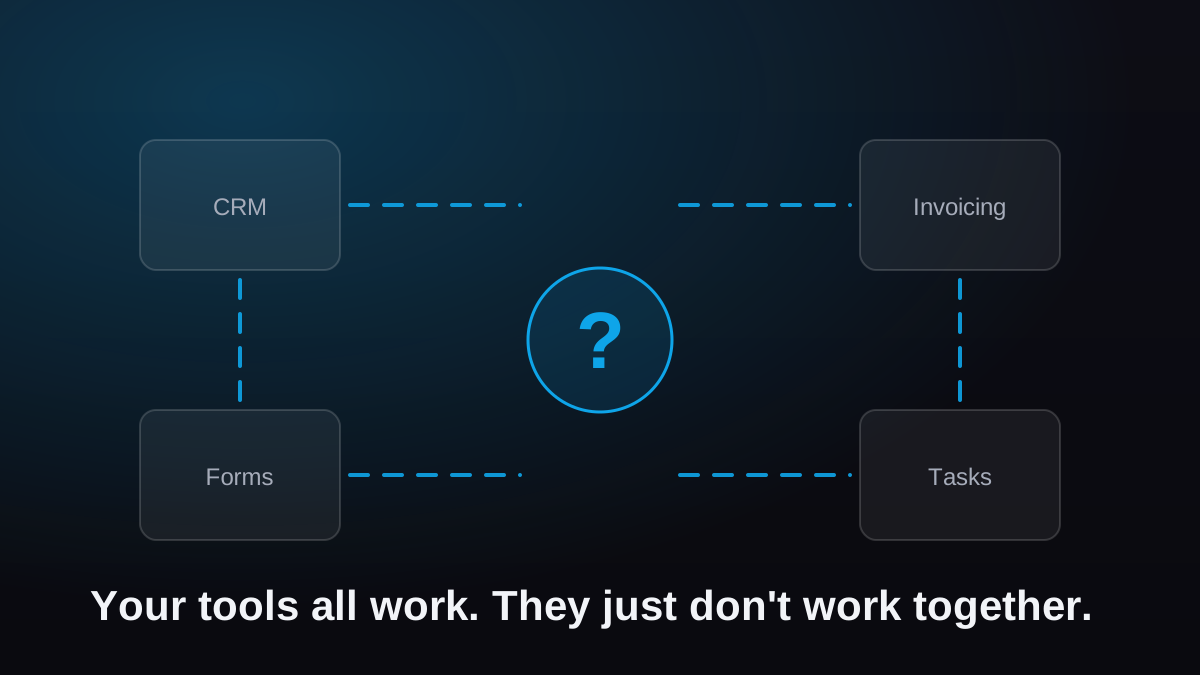
Most small businesses don't have a software problem. They have a plumbing problem. The apps are fine. The connections between them don't exist, so people become the connections. Here are the five signs I see over and over.
1. You're copy-pasting the same info between apps
A customer fills out your website form. Someone reads the email, copies the details into the CRM, copies them again into the project tracker, and types the name a third time into the invoicing app. Same data, four keyboards' worth of typing, three chances for a typo.
The fix is boring and wonderful: the form feeds everything else automatically. Enter it once, it shows up everywhere it needs to be. This is usually the first thing worth connecting because it touches every new customer.
2. You find out about problems from customers, not your systems
An order stalls, a payment fails, a job sits unassigned for four days, and the first you hear of it is an annoyed phone call. Your systems knew. They just had no way to tell anyone.
Connected tools flip this around. When something sits too long or fails, a message shows up in front of the right person the moment it happens. You get to call the customer before they call you. That's a different business.
3. You've got three "sources of truth" and none of them agree
The CRM says the customer's phone number is one thing. The spreadsheet says another. The invoicing app has a third, and it's the only one that's right. Ask three people for a customer count and you'll get three answers, delivered with three levels of confidence.
This one quietly poisons decisions. You can't trust a report built on data nobody trusts. The fix is picking one system as the master for each kind of data and syncing the others to it, automatically, so drift stops accumulating.
4. Someone has a 45-minute daily routine that's just moving data around
Every business I've looked at has one. The morning spreadsheet update. The end-of-day status email compiled by hand. The weekly report that's two hours of copying numbers from four tabs into one. The person doing it is usually great at their job, which is exactly why it's a waste. That's 15 to 20 hours a month of skilled time spent being a courier between apps.
Almost all of these routines can run themselves. The person gets their hours back and the report stops depending on whether they're in that day.
5. You bought an integration tool and nobody set it up
Somewhere in your subscriptions there's a Zapier account, or a "connector" add-on, or a module the software vendor swore would sync everything. Someone spent a weekend on it once. It half-works, nobody trusts it, and now it's just another line on the credit card statement.
Tools don't integrate themselves. Somebody has to map out what should flow where, handle the weird cases, and test it against reality. The tool was never the problem. The missing hours of setup were.
You don't need new software
That's the part people don't expect to hear. In almost every case, the tools you already pay for can do this. They have the connections available. Nobody has wired them together, usually because the person who could is busy running the business.
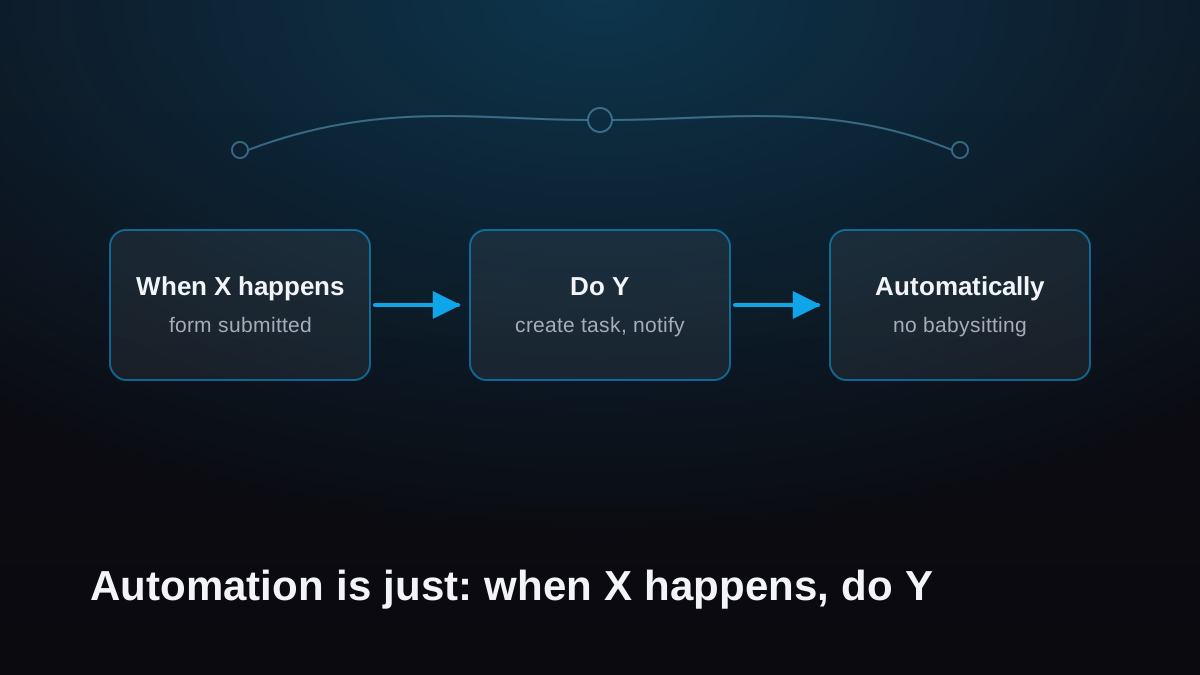
Wiring them together is exactly what systems integration means, and it's most of what we do at MKM Logic. If you want to see what the connected version looks like, this post on what automation actually means walks through real examples. And if reading these five signs felt like reading your own calendar, it's solvable. It was never as expensive or as scary as it looked.